
This is a title

Complete Guide to Geotagging Images: Boost Visibility in 2026

Geotag Images

Complete Guide to Geotagging Images: Boost Visibility in 2026

The Ultimate Guide to Geotagging Images: Increase Your Reach in 2026

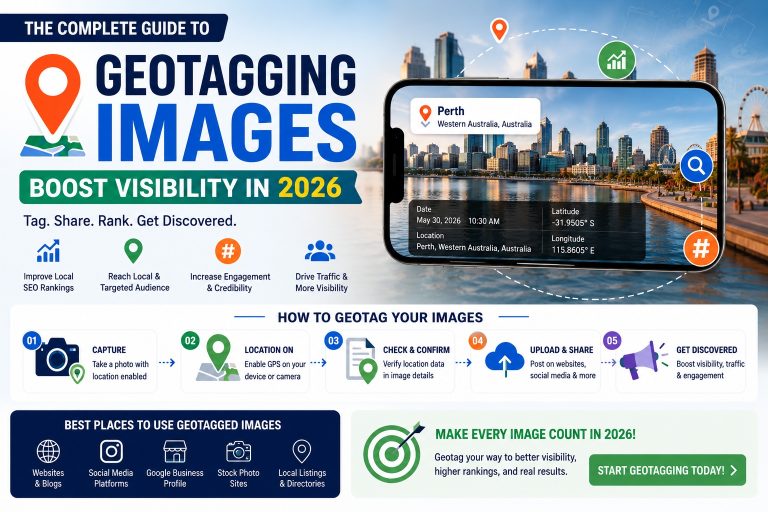
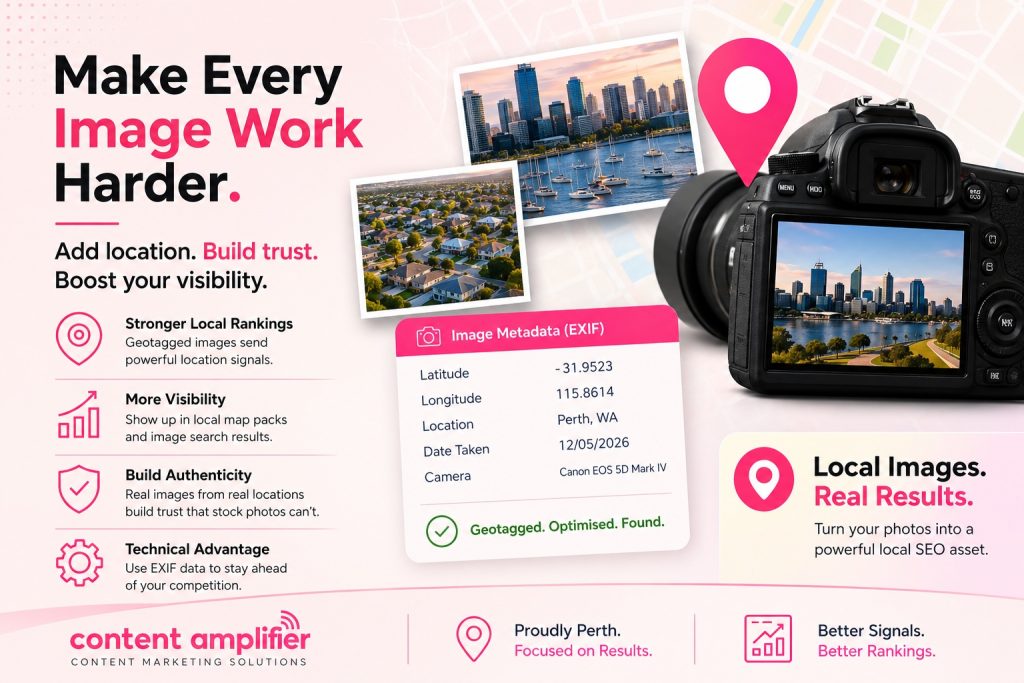
Geotagging images is the process of adding specific GPS coordinates to a photo’s metadata that tells search engines exactly where a business is located. You can do this with EXIF editors or specialized SEO tools by entering latitude and longitude into your image files before uploading. Content Amplifier helps Perth businesses leverage these technical signals to achieve better rankings in local map packs.

Why You Must Geotag Images for Search Performance

Search engines rank local search results by relevance to the search query and by proximity. Geotagging images is simply the addition of a verifiable data point that proves you were at a location. That process turns a standard JPG or PNG file into an important location signal for your overall search engine optimization strategy.

Images without metadata are lost possibilities for discovery. Adding geographic coordinates helps your visual material to show up in image search and also local map results. This is a must-do practice for every service business that wants to stay ahead of competitors who ignore technological image data.

geotag photos

Send Us a Message

Fill out the form below and we’ll get back to you within 24 hours.

How to Get EXIF Data from Image Files and Add Coordinates

The first step to improving visibility is understanding the basic structure of your files. It is called Exchangeable Image File Format ( EXIF ) data. Every photo taken has a digital “fingerprint “. It captures the camera settings, the capture date, and most significantly, the geographical coordinates.

Using an Image Metadata Viewer and Editor

You can use online metadata checkers or built-in operating system tools to verify an image’s EXIF. To check whether GPS data is present, right-click an image on a Windows computer, choose Properties, and look at the Details tab. If the EXIF fields are empty, you will need an EXIF editor to manually enter the correct latitude and longitude for your company location.

Large-scale portfolio management requires bulk processing, which is enabled by specialized instruments. Ensure the metadata is consistent across all platforms. Your local authority may be weakened, and search algorithms may become confused by inconsistent geographic data.

 The Purpose of Geotagging Images for SEO

The primary goal is to bridge the gap between digital content and physical locations. When a user in a specific suburb searches for a service, search engines look for local markers. Geotagged photos provide these markers, making your website more authoritative for location-based queries.

This technical detail provides a layer of authenticity that stock photos lack. Original, geotagged photography proves that your team is active in your service area. It builds trust with both the search engine and the potential customer.

Local Relevance and Perth Service Area Specifics

 There is a lot of competition for businesses in Western Australia, especially in the Perth CBD and nearby suburbs such as Clarkson. Often, the usual SEO strategies just aren't enough to get you in the first place in the map pack. Use all the technical advantages you have, including the image metadata for the precise area.Perth is rather spread out; your imagery should be customised to the actual suburbs you cover. If you are a Joondalup contractor or a Fremantle merchant, your photos should mention those specific coordinates. Hyper-local targeting means you can appear in users' searches within those specific metres.Content Amplifier knows the Perth market and the relevance of localised data. We make sure your digital materials are beautiful and technically sound in the WA search environment. It turns your gallery into a lead generator.

Contact Information and SEO Strategy

Optimising your visual assets is a technical requirement for modern digital marketing. If your images are not working for your local SEO, you are leaving visibility on the table. Content Amplifier provides the technical expertise to ensure every file on your site contributes to your growth.

Visit our Clarkson office and discuss a tailor-made SEO programme. We specialise in high-performance strategies that deliver proven results for Perth businesses.

Content Amplifier

Unit 1, 39 Boranup Ave. Clarkson WA 6030

Service Areas: Perth and the suburbs.

Website:https://contentamplifier.com.au/

Frequently Asked Questions

Send Us a Message

Fill out the form below and we’ll get back to you within 24 hours.

What are some of the advantages of using geotagging?

The ranks of your business in local search results are improved, and it also helps your company appear in map-based search results. In addition, it provides search engines with validated location data, thereby making your content more relevant to users in the local area.

Can I add a geotag to an existing photo?

Yes, you can use EXIF tools to add or modify GPS coordinates on images after they have been taken. This is a common practice when optimizing older website galleries or stock images used for local landing pages.

How accurate is geotagging?

Modern GPS metadata is accurate within a few metres. This precision allows search engines to pin your business or project site to a specific street address or landmark with high confidence.

What does EXIF data tell you?

It also displays technical information such as the camera model, aperture, shutter speed, and the date the photo was created. This info helps to check the originality and age of the content.

Do all images have EXIF?

Most digital cameras and smartphones automatically generate EXIF data. However, many social media platforms strip this data during upload for privacy reasons, so you must ensure your website images retain it.

Do all images have EXIF?

Most digital cameras and smartphones automatically generate EXIF data. However, many social media platforms strip this data during upload for privacy reasons, so you must ensure your website images retain it.

Leave a Reply

Your email address will not be published. Required fields are marked *